

Crypto-related fraud continues to rise sharply in 2025. From deepfake celebrity endorsements to Telegram “pump signals” and fake trading apps, scammers now operate globally and at extreme speed. After losing money, most victims ask one urgent question:
“Where do I report this?”
This updated ScamFindings guide explains exactly how to report crypto scams in the UK, US, and EU, what evidence you’ll need, what actually happens after filing a report, and why reporting is still necessary even when recovery is uncertain.
Important Reality Check:
Government agencies rarely recover individual victims’ funds. But reporting remains crucial for intelligence, enforcement, and strengthening any professional recovery case you may pursue later.
Why Reporting a Crypto Scam Still Matters in 2025
Many victims feel discouraged when they learn that submitting a report does not guarantee reimbursement. However, reporting plays an essential role in the broader fight against organized crypto fraud.
Reporting helps you because:
- Your case is added to national and international fraud databases.
- Regulators can identify patterns and stop active scam networks.
- It creates an official record, which is critical for tracing, chargebacks, or court-backed recovery.
Reporting helps others because:
- It prevents additional victims from falling into the same scheme.
- It provides authorities with intelligence that leads to arrests and platform shutdowns.
- It strengthens the global data pool used to track illicit wallets and laundering routes.
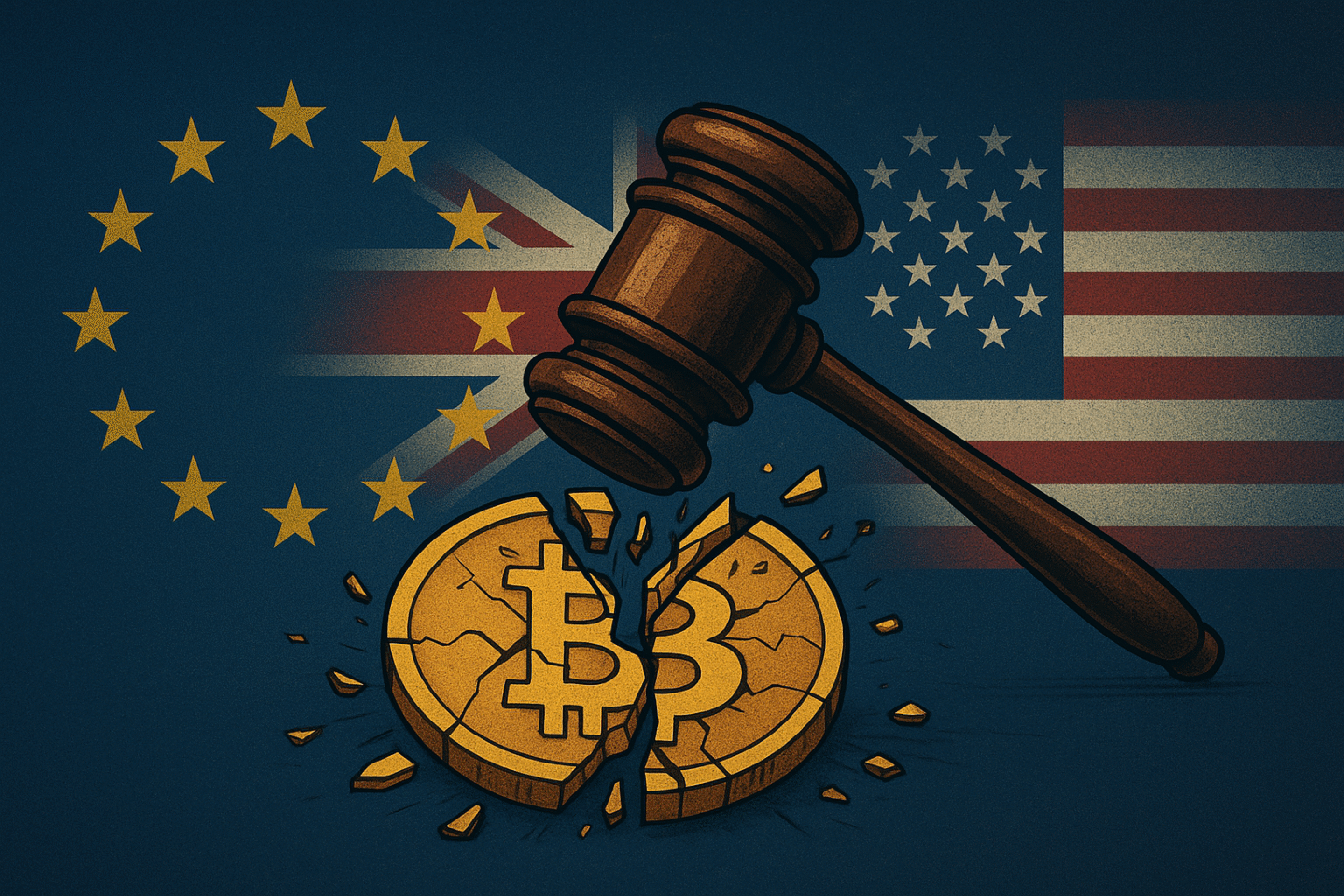
How to Report a Crypto Scam in the UK (2025 Version)
In the United Kingdom, three main agencies manage crypto fraud complaints. All victims should file with Action Fraud, then report any investment-related entities to the FCA.
- Action Fraud UK (Primary Reporting Channel)
- Website: https://www.actionfraud.police.uk
- Phone: 0300 123 2040
Action Fraud will issue a Crime Reference Number, which is important for future recovery attempts.
Use the FCA’s ScamSmart tool to check or report fake platforms and unlicensed investment firms.
- National Cyber Security Centre (NCSC)
- Forward phishing emails to: report@phishing.gov.uk
- Submit cyber-related abuse or malicious links.
UK Tip:
Reports are rarely investigated individually, but your evidence may match with larger cases the police are already working on.
How to Report a Crypto Scam in the United States
Crypto scam victims in the US are encouraged to report to multiple agencies, depending on the type of fraud.
- Federal Trade Commission (FTC)
File consumer fraud complaints at ReportFraud.ftc.gov.
For cases involving:
- Unregistered securities
- Fake investment programs
- Ponzi-style crypto offerings
- Commodity Futures Trading Commission (CFTC)
For scams involving:
- Crypto futures
- Margin or leveraged trading
- Derivatives
Submit cybercrime and online financial fraud cases at ic3.gov.
US Tip:
Authorities will acknowledge your complaint but will not trace or return individual funds. Reports feed larger criminal investigations.
How to Report a Crypto Scam in the EU
The European Union uses a distributed model, meaning you should report both to national regulators and European-level authorities.
- Europol – European Cybercrime Centre (EC3)
Provides intelligence aggregation for cross-border crypto fraud.
- European Securities and Markets Authority (ESMA)
Handles misleading investment offers, illegal securities activity, and fraudulent “crypto investment” firms.
- National Regulators (Examples)
- Germany – BaFin
- France – AMF
- Italy – CONSOB
Each regulator has its own online complaint portal.
EU Tip:
Most crypto scam cases involve cross-border activity. Reporting helps authorities connect your case to hundreds of similar victims.
Romance-Based Crypto Scams to Watch in 2025
1. Dating App Crypto Scams
Scammers build emotional connections on apps like Tinder, Hinge, and Bumble. Once trust is established, they introduce “exclusive” crypto investments that lead victims to fraudulent trading platforms.
2. Telegram Romance Trading Scams
These scams blend romance and financial manipulation. Victims are added to private Telegram groups run by fake “mentors” or “advisors” who pretend to care while guiding them into high-return trading scams.
3. Pig-Butchering Schemes
A long-term psychological scam where fraudsters slowly “fatten” victims with fake profits displayed on fabricated dashboards. When victims invest heavily, scammers wipe the accounts and vanish.
Romance-driven scams now represent a large portion of global crypto fraud because they target emotions, not just financial decisions.
Documents & Evidence You Should Collect Before Reporting
✔ Transaction hashes (TXIDs) and wallet addresses
✔ Screenshots of exchange withdrawals or deposits
✔ Contracts, PDFs, agreements, pitches, or terms
✔ Email/Telegram/WhatsApp chat logs
✔ Bank transfer records
✔ Screenshots of the scam website or app
Pro Tip:
Never delete messages — even if they seem irrelevant. Small details often help forensic investigators trace crypto flows.
What Happens After You File the Report?
Here’s what victims should realistically expect after submitting complaints:
- Your case is entered into national and EU-wide databases.
These databases help detect patterns and link your case to other victims.
- You receive a case or reference number.
This is essential for evidence-led tracing or legal recovery.
- You may not hear back immediately.
Investigations can take months or years.
- Large-scale losses get priority.
Authorities focus on cases affecting thousands of victims or high overall loss amounts.
- Individual fund recovery through law enforcement is rare.
This applies worldwide — UK, US, and EU.
What To Do After You File Your Report (Next Steps)
- Preserve all evidence you submitted
- Do not pay recovery agents or verification fees
- Request a forensic wallet trace to understand where funds moved
- Watch for follow-up scams impersonating investigators
- Inform your bank if fiat transfers occurred
- Secure your devices with malware scans
- Write a clear timeline of events for future legal or tracing steps
⚠ Warning: No Government Agency Will Ever Contact You to Release Crypto Funds for a Fee
Scammers often impersonate agencies such as the FCA, FBI, Europol, Action Fraud, or Interpol.
No real authority will ever ask you to pay a “verification fee,” “unfreezing fee,” “tax,” or “processing charge” to release or recover cryptocurrency.
If someone contacts you claiming this, it is a second scam targeting known victims.
ScamFindings Checklist for Crypto Scam Victims (2025)
✔ Report the scam to the appropriate authority in your region
✔ Keep every piece of evidence (never delete conversations)
✔ Avoid “recovery agents” asking for upfront fees — most are scams
✔ Consider legitimate blockchain tracing and forensic analysis
✔ Stay updated with ScamFindings alerts to avoid repeat victimization
Conclusion: Reporting Is Not Instant Justice, but It Is Essential
Reporting a crypto scam does not guarantee your money will return — and that’s the reality in 2025.
But filing a report:
- Protects future victims
- Contributes to shutting down organized fraud networks
- Creates the official paper trail needed for any credible recovery attempt
If you have already reported your case and need help understanding whether tracing is viable, a forensic crypto review is the next step. It helps determine whether stolen assets passed through trackable exchanges, mixers, or identifiable wallets and whether further action is realistically possible.
ScamFindings Checklist for Crypto Scam Victims (2025) (2026 Edition)
After you tick off the checklist, don’t just sit back. Take a good look at your accounts and devices. Change passwords. Turn on two factor authentication. Watch for anything weird—logins from strange locations, sudden notifications, odd messages. Scammers have a way of circling back, and they love targeting the same victims more than once.
Connecting with other cryptocurrency users can also help. Forums, discussion groups, and ScamFindings manuals can alert you to new tricks. For instance, How to Spot Crypto Scams in 2025 breaks down the common traps, while the LWEX trading platform analysis shares real cases where users got caught off guard. You start noticing patterns after a while.
Also, keep an eye on reviews. The Bluequbit.org review shows how repeated complaints can signal danger before it’s too late. And sites like Trustpilot aren’t perfect, but they can still clue you in if something smells off. Stay alert, take notes, and remember—being cautious now might save you a lot of trouble later, while helping authorities track the fraudsters.
FAQs
-
Can reporting a crypto scam help me recover my money?
Reporting alone rarely recovers funds, but it creates an official record that is vital for tracing, legal actions, or working with professional recovery teams.
-
Should I report to multiple agencies?
Yes. Multi-agency reporting increases the chances that your case will match ongoing investigations.
-
Can police track blockchain transactions?
Yes. Modern blockchain analysis tools allow tracing of wallets, mixers, laundering routes, and exchanges used by scammers.
-
Should I contact a private recovery company?
Only choose recovery services that do not charge upfront fees and have a verifiable track record. Most “guaranteed recovery” offers are scams.
-
What evidence is most important for reporting a crypto scam?
Transaction IDs (TXIDs), wallet addresses, transfer screenshots, and chat logs are the most helpful for investigators.
-
Will the scammer be caught?
Possibly — but it depends on scale. Authorities prioritize cases involving large victim groups or millions in total losses.
-
Is it worth reporting if the scam happened months ago?
Yes. Older cases still support investigations and can be linked to current fraud activity.






Jason Clinton
September 14, 2025 at 11:38 pm
I know firsthand how devastating it feels to lose money to a scam. When it happened to me, I was left frustrated, hopeless, and unsure where to turn. Complaining to apps about being scammed on their platforms didn’t change anything it felt like no one cared.
Amayah Randolph
October 5, 2025 at 7:44 pm
I also faced similar incident that occurred on Facebook and i lost 1.7 ETH. Scammers are really getting away with their actions.
TXEX Trading Platform Scam Review 2025 – Complaints, Red Flags & Recovery
September 18, 2025 at 3:14 am
[…] Request Chargeback – from banks or payment providers. […]
Axiom Trading Platform Scam Review 2025 – Real User Experiences & Warnings
September 18, 2025 at 6:30 pm
[…] it. File with your national regulator and IC3 if you’re in the […]
Lily Rose
September 19, 2025 at 7:57 am
Although the cryptocurrency digital realm presents many opportunities, it also conceals complex frauds. It’s terrible to lose your cryptocurrency to scam. You could feel lost and violated as a result. If you have fallen victim to a cryptocurrency scam, this guide explains what you should do immediately. By doing these actions, you can avoid more issues or receive your money back. Everything can be changed by knowing what to do quickly.
Mihir Sukthankar Scam — $5M “Prodigy Trader” Fraud Case Explained (2025)
September 19, 2025 at 3:27 pm
[…] 👉 See our full Guide to Filing a Scam Complaint Report. […]
Bluequbit Scam Review (2025): Exposed by Victims & Investigators
September 28, 2025 at 4:17 am
[…] How to Report Crypto Scam in 2025 for more […]
ACCGN Scam Review (2025): AMF Warning on acc.accgn.net — What Victims Can Do
October 1, 2025 at 12:31 am
[…] Read more on How To Report Crypto Scams in 2025 […]
Donnie Hollowell
October 5, 2025 at 7:43 pm
I believe that there are individuals who have lost their crypto one way or the other. I strongly advise that you don’t seek help recovering it online because you are likely going to meet a scammer who will steal more of your funds in an attempt to help you recover your lost crypto. I personally have used Melmac Solutions when I had to recover my bitcoin stolen by scammers, and i don’t know how, but they made it happen.
RazeMarkets Scam Exposed: How Victims Lost Thousands & What You Can Do
October 11, 2025 at 3:41 am
[…] Silence or suspension: When victims push to withdraw or question licensing, communications slow, then stop — or accounts are disabled for “compliance” reasons. Read more on Investor’s protection and how to report a cryptocurrency scam here. […]
Lunar Masters (lunarmasters.live) Scam Exposed: How Victims Lost Thousands & What You Can Do
October 12, 2025 at 2:38 pm
[…] (see ScamFindings How to Report Crypto Scam in 2025) […]
Globalmarketshub Scam Exposed: How Victims Lost Thousands & What You Can Do
October 13, 2025 at 11:55 pm
[…] Learn more: scamfindings.com/report-crypto-scam-uk-us-eu-2025/ […]
Coincaptrading (coincaptrading.com) Scam Exposed: Contacts, Domains, Tactics — and What You Can Do
October 23, 2025 at 11:57 pm
[…] Learn more: How to report crypto scam in 2025 […]
Bittmarket (bittmarket.com) Scam Exposed: Contacts, Claims, Complaints — and What You Can Do
October 24, 2025 at 12:58 am
[…] Learn more: How to report crypto scams in 2025 […]
Bonmot Invest Review (2025): Legit Investment Platform or Scam?
October 26, 2025 at 12:44 am
[…] Report a Scam | Recovery Guide […]
SM Trading Center Review (2025): Safe Broker or Scam?
October 26, 2025 at 2:10 am
[…] Internal Links: Report a Scam | Recovery Guide […]
PrimeWealth Review (2025): Unlicensed Broker Exposed
October 26, 2025 at 3:24 am
[…] Report a Scam | Recovery Guide […]
DeepFetchAI Review (2025): AI Trading Innovation or Scam?
October 26, 2025 at 3:39 am
[…] Report a Scam | Recovery Guide […]
CenexPro Review (2025): Trusted Broker or Investment Scam?
October 26, 2025 at 3:56 am
[…] Report a Scam | Recovery Guide […]
Coinsky Review (2025): Crypto Trading Platform or Fraud?
October 26, 2025 at 4:28 am
[…] Report a Scam | Recovery Guide […]
Valtrix Group Review (2025): Investment Firm or Fraud?
October 26, 2025 at 4:48 am
[…] Report a Scam | Recovery Guide […]
Margin Rivou Review (2025): Forex Broker or Fraud?
October 26, 2025 at 5:19 am
[…] Report a Scam | Report a Scam […]
Orbit Elite Trade Review (2025): Legit Trading Platform or Fraud?
October 26, 2025 at 5:34 am
[…] Report a Scam | Recovery Guide […]
BoostyFlow Review (2025): Legit AI Bot or Crypto Scam?
October 26, 2025 at 7:53 am
[…] Report a Scam | Recovery Guide […]
UniSmartMove Review (2025): Smart Investing or Scam?
October 26, 2025 at 8:10 am
[…] Report a Scam | Recovery Guide […]